How long do you need to stay in hospital for a brain aneurysm?
What to expect when staying in hospital for treatment of a brain aneurysm.
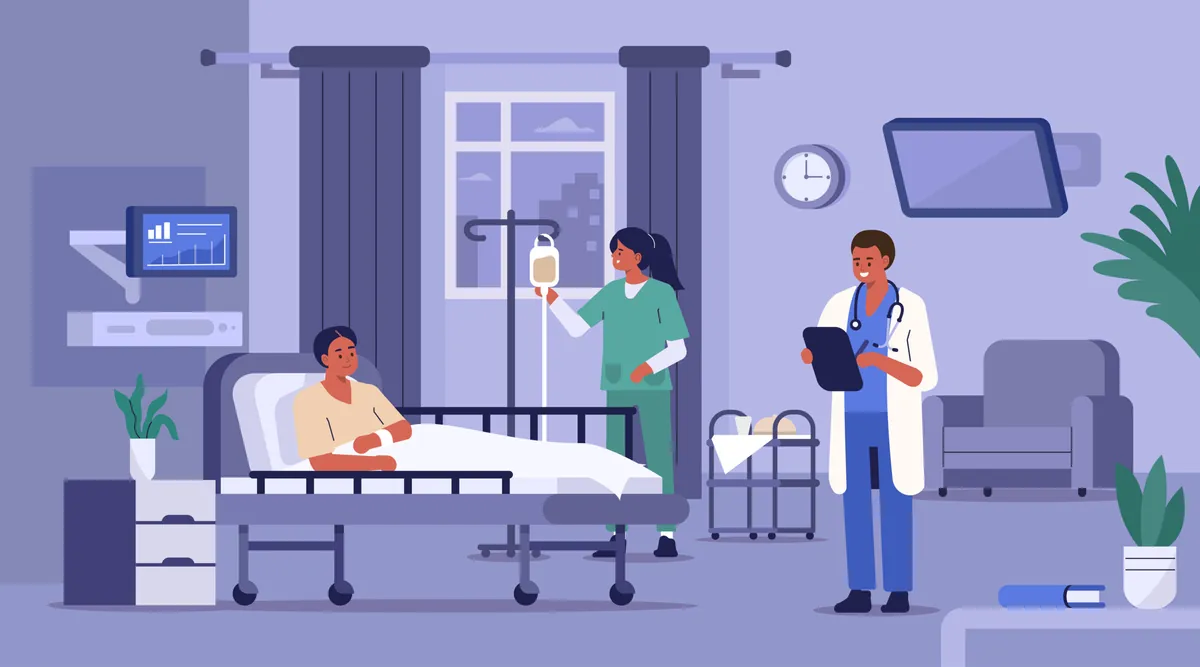
If you are told you have a brain aneurysm, one of the first questions you may ask is how long you might need to stay in hospital for treatment. The answer depends on whether the aneurysm has ruptured (bled) or is unruptured (found before bleeding).
We will begin by discussing unruptured aneurysms, treated electively (planned in advance). These are usually found incidentally on a brain scan. Not all need treatment straight away. For those that do, there are two main treatment approaches:
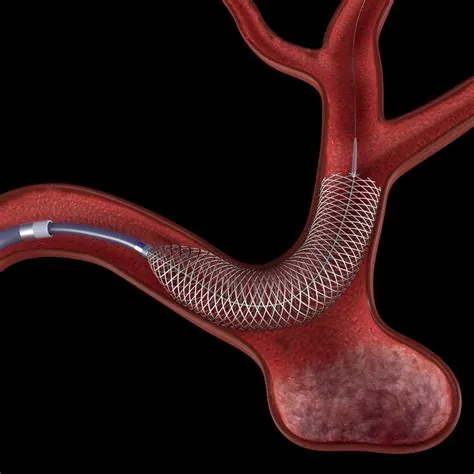
- Endovascular treatment: A minimally invasive procedure performed from inside the blood vessels. A thin tube (catheter) is passed through an artery in the groin or wrist up to the brain. Devices such as coils, stents or flow diverters are placed to block or redirect blood flow away from the aneurysm.
- Surgical clipping: An open operation. A small section of the skull is temporarily removed, and a tiny metal clip is placed across the base (neck) of the aneurysm to seal it off. The bone is then replaced and fixed with plates.
Both treatments are effective. Historically, surgery was the only option. Today, most aneurysms suitable for endovascular treatment are treated that way because it is less invasive and recovery is often quicker.
Hospital stay for unruptured aneurysms
Staying in hospital after aneurysm treatment allows doctors to monitor closely for complications such as stroke, seizures, or bleeding. It also gives time to manage pain effectively and care for the surgical or access site wound. The hospital stay supports early mobilisation and recovery in a safe environment, while also ensuring that plans for discharge and follow-up care are properly arranged.
For endovascular treatment, the average stay is about one day. Many patients go home the following morning, once routine scans and checks confirm that everything is stable. However, if the treatment has complications then hospital stays can be longer. There may be some discomfort at the groin or wrist access site, but this usually settles quickly. Patients can mobilise soon after treatment and often return to normal activities within days. Returning to work is sometimes possible within the same week if recovery is smooth.
For surgical clipping, the hospital stay is usually about a week. This longer stay is because open surgery is more invasive, involves a wound in the skull, and requires closer monitoring as the body heals. In the first days, swelling and bruising of the face are common and can temporarily close the eyes. Headaches can also develop. Some patients notice the bone flap (the piece of bone replaced after surgery) feels like it moves, but this is not dangerous and heals securely. The chewing muscle can be sore, making it harder to open the mouth or chew for a few months. These symptoms usually improve within six months. Most people need a few weeks to months off work. Going back earlier is possible but can lead to more fatigue. If complications develop, similar to endovascular therapy, hospital stays can be longer.
What about ruptured aneurysms?
When an aneurysm ruptures, it causes a type of stroke called a subarachnoid haemorrhage (SAH). This is a life-threatening emergency. In this situation, hospital stays are much longer, usually at least 14 days, and often longer if complications develop. Care almost always includes time in an intensive care unit (ICU).
Treatment may be either endovascular or surgical, but the general trend is towards endovascular approaches when suitable, as supported by the International Subarachnoid Aneurysm Trial (ISAT). This large study showed that, in patients with ruptured aneurysms suitable for either approach, endovascular treatment led to better outcomes and fewer long-term complications than open surgery.
Key takeaways
- For unruptured aneurysms, hospital stay is about 1 day after endovascular treatment and about a week after surgical clipping.
- Endovascular treatment is minimally invasive, usually with a quicker recovery and early return to normal activities.
- Clipping is more invasive, requiring a longer stay and a recovery that can take weeks to months.
- For ruptured aneurysms (subarachnoid haemorrhage), hospital stay is usually at least 14 days, often with time in ICU. * The ISAT trial showed that endovascular treatment gives better long-term outcomes than surgery for many ruptured aneurysms.
Full guide to brain aneurysms
Take control of your health with clear, expert information:
- What brain aneurysms are
- Diagnosis and treatment explained
- When to seek help
Aneurysm